
Love Eden: Interactive Stories
Noderno LimitedSimulation
4.5683.00 Reviews
- Version
- 2.5.0
- Installs
- 100.00K
- Age Rating
- Mature 17+
Screenshots



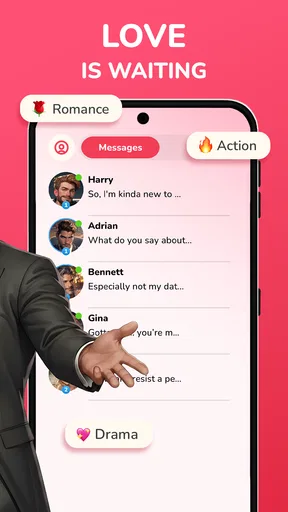
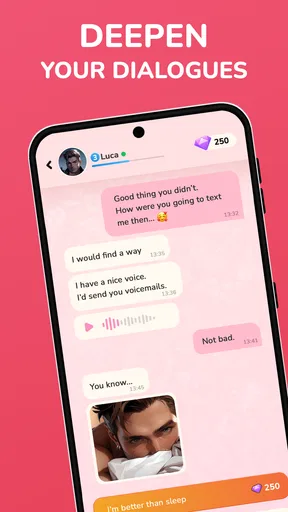

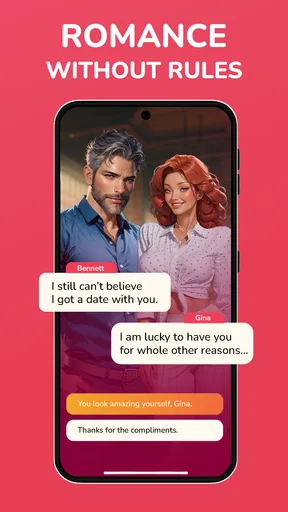

Our Review of Love Eden: Interactive Stories
 Analysis by Appyee
I approached Love Eden: Interactive Stories as a private romance game rather than a conventional dating service. That distinction matters, especially in a household where a phone or tablet may be used by more than one person. The game is built around chatting, flirting, and choosing a romantic direction, so the appeal comes from personal decisions and mood-driven conversations, not from managing a shared profile or coordinating with real people.
My first impression was that it works best as a short, individual escape. I could pick it up when I wanted something lighter than a competitive game and more interactive than simply reading a story. The simulation category is a useful description, although I would personally think of it as a romance-focused conversation experience with interactive storytelling at its center. Its Mature 17+ rating also sets an important boundary from the beginning: this is not a title I would casually hand to a child or leave open on a shared family device.
How Love Eden fits into everyday shared-device use
Imagine a household where one phone is passed between a parent, an older teenager, or a partner during the day. A game like this can be enjoyable, but it does not naturally belong to a communal save file. The decisions are personal, the romantic tone is personal, and the story experience makes the most sense when one person controls the session from start to finish. I would treat it more like a private book or a personal chat-based game than a board game that everyone can join.
That does not make it unsuitable for a shared device. It simply means that timing and boundaries matter. If I were using it on a tablet that others regularly borrow, I would close the game after playing rather than assuming the next person would understand what they were seeing. I would also avoid beginning a story in a public setting if I wanted to keep the experience private. The mature rating is a practical reminder that the romantic themes may not fit every room, audience, or moment.
There is also a useful difference between sharing a device and sharing an account. A household can discuss whether the game is appropriate, but that does not turn the same in-game progress into a family activity. If several people want to try it, I would recommend agreeing on whose turn it is and avoiding decisions made on someone else’s behalf. Romance stories lose much of their appeal when another person taps through the important choices without permission.
For a realistic everyday scenario, I can see one adult playing during a commute break, then returning to the same story later at home. If the device is shared in the evening, the player should finish the session before handing it over and remember that the game’s subject matter may be visible from the screen. That small habit prevents an otherwise harmless entertainment choice from becoming awkward family coordination.
Setting personal boundaries before the first story
The best way to approach this game is to decide what kind of experience you want before getting absorbed in the conversations. I would not treat every prompt as a test of what I would say in real life. Interactive romance often rewards curiosity, experimentation, or dramatic choices, and that is part of the fiction. Keeping that boundary clear helps the game remain entertainment instead of becoming an uncomfortable imitation of a real relationship.
I also recommend deciding how much time you want to give it in one sitting. Conversation-led games can encourage “just one more choice” because each exchange feels small, but the emotional rhythm can make a session last longer than expected. On a shared device, ending at a natural pause is especially helpful. It reduces the chance that another household member opens the game in the middle of a private scene or interrupts a moment you wanted to experience alone.
Another practical boundary concerns purchases. Love Eden is free to download and play, but it includes optional purchases ranging from $0.99 to $129.99 per item. That is a wide range, so I would be careful with payment settings before letting anyone else use the device. In a household, the important question is not only whether the game costs nothing at installation; it is who is allowed to approve an optional purchase and how that approval is handled.
I would not let a child or younger teenager use the game simply because it is free. The Mature 17+ classification should guide the decision, and the adult responsible for the device should make that call. If an older teenager is considering it, I would discuss the age rating and the possibility of optional spending first. That conversation is more useful than assuming a free title has no financial or content boundaries.
Coordinating play without turning it into a group activity
Love Eden does not strike me as a game that needs household coordination in the same way a multiplayer title does. There is no reason for several people to be online together or to arrange a shared play schedule. The coordination it needs is simpler: decide who owns the current progress, keep personal choices separate, and make sure the device is available when the player wants to continue.
If two adults in the same home both enjoy interactive romance, I would give each person a clearly defined turn rather than letting both people make choices in one storyline. One person can explain what they liked about the writing afterward, but the actual decisions should remain with the player. This preserves the main pleasure of the format, which is seeing how a personal response changes the direction or tone of the experience.
A shared tablet creates a slightly different problem. Even if separate people do not play at the same time, the game may remain visible in the recent-apps screen or on a home screen. I would therefore consider the device’s normal privacy habits before installing it. This is not a criticism of the game itself; it is a reminder that romance content is more sensitive than a puzzle or racing title when devices move around a household.
There is also a coordination issue around expectations. Someone who enjoys competitive simulations may expect systems, resource management, or clear goals, while this game is more about interaction and romantic storytelling. If a family member borrows the device expecting a traditional simulation, they may find the experience surprisingly personal and conversation-heavy. Explaining that difference beforehand avoids confusion and makes it easier for each person to choose something suited to them.
What the experience does well for a solo player
For me, the strongest part of the concept is the directness of the interaction. Instead of watching a romance unfold entirely from a distance, I get to respond and shape the tone through choices. The store summary presents the game as a place to chat, flirt, and look for love, but the practical appeal is more specific: it gives me a low-pressure way to explore romantic scenarios without needing another real person to reply.
That makes it a good fit for players who like interactive fiction but want a warmer, more relationship-focused subject. It can also suit someone who enjoys reading character-driven scenes yet wants more agency than a standard novel provides. I would choose it when I want a relaxed, emotionally themed game rather than a challenge based on reflexes, tactics, or competition.
The format can be useful in small breaks because conversation choices are easier to approach casually than a long action mission. I can imagine playing for a few minutes while waiting for an appointment, then returning later when I have more attention. At the same time, I would not assume every session feels disposable. A romantic story can make even a short exchange feel meaningful, and rushing through choices just to clear notifications or reach the next scene would weaken the experience.
One non-obvious advantage is that the game can serve as a test of what kind of interactive storytelling a player actually enjoys. Someone who thinks they dislike games may discover that they enjoy making dialogue decisions, while a player who normally prefers large simulation systems may realize that they need more mechanical depth. I would use it as a focused experiment in narrative choice, not as a replacement for every other kind of game.
Where the trade-offs become noticeable
The same focus that makes the game approachable can limit its appeal. If I want a broad life simulation, detailed management, open exploration, or a deep strategy layer, this is probably not where I would look first. Its identity is tied to romance and conversation, so players who prefer building, competition, or systems-heavy progression may find the experience too narrow.
I would also be cautious about expecting real-world dating value from it. The game may let me explore fictional conversations, but that is not the same as meeting compatible people, practicing communication with a real partner, or receiving genuine relationship advice. For those goals, a dating service, a social platform, or a thoughtful book about communication would be a better choice. Love Eden is entertainment first, even when its subject matter resembles real emotional situations.
The optional purchase structure is another trade-off worth considering. A free starting point makes it easy to try, but the presence of individual purchases means I would keep spending under deliberate control. This matters even more on a shared device, where a family member might not realize that a tap can lead to a charge. I would never let the word “free” replace a clear household rule about purchases.
There is also the question of privacy in a broader sense. I would avoid treating the game’s conversations as something to display casually, especially around younger family members or guests. A player who wants completely neutral, public-friendly entertainment should choose a different genre. The Mature 17+ label is not a minor detail; it changes where and with whom I would use the app.
Age, trust, and responsible use at home
The age context deserves more attention than it usually receives in a game review. A Mature 17+ title should be selected by an adult who understands the content environment, not by assuming that an older-looking interface is automatically suitable for everyone. In a household, I would talk openly about the rating before installation, particularly if the device belongs to more than one person.
Trust also works both ways. If an adult allows an older teenager to play, the agreement should cover more than screen time. It should include whether optional purchases are allowed, whether the game can be played in shared spaces, and whether another person may open the app. These are ordinary household rules, but they are especially relevant when a game centers on flirting and romance rather than anonymous puzzles or sports.
I would not invent a family-control system around the title or assume that the game will solve these issues automatically. The safer approach is to rely on the device owner’s existing account and spending habits, plus direct communication between household members. If the device is used by several people with different ages, a separate personal device is preferable when available. That keeps the mature content away from accidental discovery and protects the player’s sense of privacy.
For adults, the rating does not mean the game is automatically unsuitable. It means I would choose the setting thoughtfully. Playing alone with headphones may provide the right atmosphere, while playing with the screen facing a room full of relatives may not. The decision is less about embarrassment and more about respecting the fact that different people have different comfort levels with romantic material.
Performance, access, and what to expect from the current release
The game was released on August 27, 2023, and the current version is 2.5.0. It requires Android 8.0 or later, which makes it accessible to many users with older Android phones while still leaving very old devices outside its range. Before installing, I would check the operating system on any shared tablet rather than assuming that a device used for basic browsing will support it.
Its popularity gives me some confidence that it has found an audience: the game has an average rating of 4.5 from around 11 thousand ratings, with over 100 thousand installs. I read those figures as signs of a healthy reception, not as a guarantee that every player will enjoy the same style of romance storytelling. Ratings are especially personal here because enjoyment depends on tolerance for dialogue-led pacing and mature themes.
Noderno Limited is the developer behind the game. I would keep the developer name in mind when checking the app page or confirming that I have selected the correct title, particularly because romance games can use similar wording and imagery. On a shared device, identifying the exact app before installation also helps prevent someone from downloading a different title by mistake.
Because it is free, the sensible workflow is to try the opening experience without committing money, then decide whether the writing and interaction style justify further use. I would not purchase anything simply to accelerate curiosity. First I would establish whether I enjoy the conversations, whether the tone suits me, and whether I am comfortable with the game on my personal or household device.
Who should choose it, and who should pass
I would recommend Love Eden to an adult who enjoys romance fiction, character conversations, and making choices that influence a fictional relationship. It is also a reasonable fit for someone who wants a quiet, solo game that can be played in short sessions without competing against other players. The strongest audience is not necessarily experienced gamers; it is people who like stories and want to participate in them.
I would suggest skipping it if you want a conventional simulation with construction, economics, schedules, or detailed control over a virtual world. The category label may raise those expectations, but the romantic conversation focus is the feature that defines the experience. I would also steer away from it if you need a game that is comfortable for children, suitable for a public family screen, or free from optional purchases.
Compared with a traditional visual novel, this game’s attraction is the feeling of responding directly rather than simply following a fixed route. Compared with a real dating app, its advantage is that there is no need to present yourself to actual strangers or manage real-world conversations. Its disadvantage, naturally, is that fictional interaction cannot provide the unpredictability, mutual consent, or genuine connection of meeting someone in life. Those alternatives are better when the goal is social contact rather than escapism.
Compared with a general life simulator, the experience is more concentrated. I do not choose it for a large sandbox of activities; I choose it for romance as the main subject. That narrower focus can feel refreshing when I know exactly what mood I want, but restrictive when I want variety. Understanding that trade-off before downloading is the easiest way to avoid disappointment.
My household verdict
After looking at it through the lens of shared-device use, I see Love Eden as a personal game that can live in a household, but should not be treated as a household game. I would keep the player and the progress clearly defined, agree on purchase boundaries, and respect the Mature 17+ rating. Those steps are simple, yet they make a meaningful difference when one screen serves several people.
My practical advice is to start privately, play without spending, and pay attention to whether the conversational style feels engaging rather than merely novel. If the romantic choices hold my interest, the game can become an easy companion for quiet breaks. If I want broad simulation mechanics, real dating, or universally appropriate family entertainment, I would choose another category instead.
Overall, I find the title most convincing when I treat it as interactive romance fiction with a simulation label, not as a substitute for a social network or a full life simulator. Its real strength is giving one player control over a fictional romantic experience while keeping the commitment low at the starting point. For the right adult player, that is enough to make it worth trying; for a shared family device, careful boundaries are essential.
Verdict
Strengths of Love Eden: Interactive Stories
- Large selection of romance stories with different themes and characters.
- Choices can change relationships, scenes, and the direction of the plot.
- Episodes are easy to read in short sessions on mobile devices.
- Regular story updates can keep the experience feeling fresh.
- Attractive character art and illustrated scenes enhance the storytelling.
Limitations of Love Eden: Interactive Stories
- Energy or ticket limits may interrupt reading during longer sessions.
- Some premium choices can be expensive for players who want every outcome.
- Certain story paths may feel predictable or rely on familiar romance tropes.
- Progress and rewards can depend heavily on watching ads or waiting.
- The app may require an internet connection for stories and interactive content.
Similar Picks in This Category
View All
Truckers of Europe 3
Wanda Software4.3

Town Building Life Simulator
XGame Global4.2

Fidget Toys Trading・Pop It 3D
Freeplay Inc4.7

Sculpt People
CrazyLabs LTD4.4

Scary Teacher 3D
Z & K Games4.2

Hair Tattoo: Barber Shop Game
CASUAL AZUR GAMES4.3
Frequently Asked Questions
What is Love Eden: Interactive Stories?
Love Eden: Interactive Stories is a mobile narrative game focused on romance, drama, and player choice. You follow different storylines, meet potential love interests, and make decisions that can influence conversations, relationships, and later events. Each episode is presented through illustrated scenes and dialogue, making it suitable for players who enjoy interactive fiction more than traditional action gameplay.
How do choices affect the stories in Love Eden?
Your decisions can change how characters respond to you, which relationships become closer, and how certain scenes develop. Some choices are mainly designed to shape your personality or dialogue, while others may have more noticeable consequences later in a chapter or story route. Because of this, it is worth reading conversations carefully before selecting an answer, especially during important romantic moments.
Is Love Eden: Interactive Stories free to download and play?
The game can generally be downloaded for free, but it may include optional in-app purchases. These purchases can be connected to premium dialogue choices, special outfits, bonus scenes, or faster access to story content. Free players may still be able to enjoy the main experience, although energy, tickets, waiting periods, or limited choices can affect the pace of progression depending on the current story.
Does Love Eden require an internet connection?
An internet connection may be required for downloading episodes, loading new story content, synchronizing progress, and processing optional purchases. Some previously loaded sections might work temporarily without a connection, but offline availability should not be assumed for the entire game. Connecting through Wi-Fi is recommended when installing updates or accessing image-heavy chapters to avoid interruptions and unnecessary mobile data usage.
Is Love Eden: Interactive Stories appropriate for all ages?
The game is primarily intended for older teenagers and adults because its stories may include romance, relationship conflicts, emotional drama, flirting, and themes that are not designed for young children. The exact content can vary between storylines, so parents and younger players should check the age rating and store description before downloading. Users who prefer family-friendly fiction may want to review the themes first.
Play our best games!


